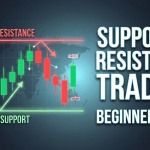

Price action trading Pakistan represents a fundamental shift in how you approach forex markets. Instead of relying on lagging indicators like moving averages or RSI, you learn to read raw price movements directly from candlestick charts. This guide teaches Pakistani traders from Karachi, Lahore, Islamabad, and other cities how to analyze market behavior using pure price data.
Most Pakistani forex traders begin their journey cluttered with indicators. They add MACD, Stochastic, Bollinger Bands, and multiple moving averages to their MetaTrader 5 charts. The screen becomes a rainbow of lines and signals. Yet despite all these tools, consistent profitability remains elusive. The reason is simple. Indicators lag behind actual price movement by their mathematical design.
Professional traders at institutions like Goldman Sachs and JP Morgan use clean charts focused on price action. They understand that price itself contains all the information you need. Every indicator calculation uses price as its input. Why not eliminate the middleman and read price directly?
This price action trading Pakistan guide provides a complete framework for naked chart trading. You will learn how to identify high probability setups using only candlesticks, support and resistance zones, and trendlines. The methods work across all timeframes and all instruments, whether you trade gold (XAUUSD), major currency pairs like EUR/USD and GBP/USD, or indices like Nasdaq and US30.
If you are new to forex trading, start with our complete guide on how to start forex trading in Pakistan to understand broker selection, account types, and basic terminology. Then return here to master price action concepts that separate profitable traders from those who struggle.
Understanding Price Action Trading Fundamentals
Price action trading Pakistan focuses exclusively on interpreting price movements to make trading decisions. The core principle is that price discounts everything. All fundamental factors, market sentiment, supply and demand dynamics, and trader psychology manifest visually through price behavior on your charts.
When you practice naked chart trading, your screen displays only candlesticks and perhaps a few manually drawn support and resistance lines. No indicators cloud your judgment. No lagging signals cause you to enter trades after the optimal moment has passed. You see what the market is doing right now, not what some mathematical formula thinks happened five or ten candles ago.
The foundation of this approach rests on understanding that markets move in predictable patterns driven by human psychology. Fear and greed create repetitive behaviors. Traders react similarly to price hitting previous highs or lows. This consistency makes price action trading effective across decades of market history.
Consider how price behaves at round numbers. When gold approaches 4000 or EUR/USD reaches 1.1000, you often see increased volatility and reversals. This happens not because of any fundamental change, but because traders psychologically anchor to round numbers. They place stop losses just beyond these levels. They take profits near them. This collective behavior creates reliable price patterns you can exploit.
Chart reading Pakistan traders must understand operates differently than Western markets due to our active trading hours. The London session opens around 12 PM Pakistan Standard Time, and the New York session begins around 5 PM to 6 PM PKT. The overlap between these sessions from 5 PM to 9 PM PKT provides the highest liquidity and cleanest price movements for our region. Price action signals during these hours carry more weight than those appearing during the Asian session overnight.
The Bank for International Settlements reports that the forex market trades over seven trillion dollars daily. Within this massive volume, price action patterns repeat constantly because the same psychological drivers influence millions of traders globally. By learning to read these patterns, you tap into a skill that works regardless of which specific market instrument you trade.
Why Price Action Outperforms Indicator Based Trading
The comparison between price action trading Pakistan methods and indicator dependent strategies reveals fundamental differences in approach and results. Understanding these distinctions helps you appreciate why professional traders favor clean charts.
Indicators suffer from an inherent mathematical lag. A simple moving average (SMA) calculates the average closing price over a specified number of periods. A 20 period SMA on the four hour chart uses data from 80 hours ago up to the current candle. By the time this average moves meaningfully, price has already established its new direction. You receive signals after optimal entry points have passed.
The Commodity Futures Trading Commission data on trader positioning often shows retail traders entering positions based on indicator signals just as smart money begins taking profits. This timing disadvantage stems directly from the lagging nature of calculated indicators.
Candlestick patterns forex traders use in price action provide immediate information. A bullish engulfing candle forms right now at support. You do not wait for MACD to cross or RSI to exit oversold territory. You see buyers overwhelmed sellers in that exact moment and respond accordingly. This real time analysis creates trading edges indicators cannot match.
Market structure reading eliminates false signals that plague indicator strategies. RSI shows oversold readings regularly during strong downtrends. Traders who buy these oversold signals lose money as price continues falling. Price action traders see the downtrend structure clearly. They recognize that oversold in a downtrend simply means an opportunity to sell the next rally, not to buy the current level.
The educational resources at Babypips School explain these concepts in their beginner courses, though they ultimately recommend combining price action with indicators. Pure price action trading Pakistan practitioners find that indicators add complexity without improving results.
Backtesting confirms price action superiority. When you test a simple support resistance trading strategy against an indicator based system over thousands of trades, the price action approach typically shows higher win rates and better risk to reward ratios. The reason is straightforward. Support and resistance levels represent actual zones where buying and selling pressure has historically appeared. These are real phenomena. An indicator overbought reading is an abstract calculation that may or may not correspond to actual market turning points.
Professional trading firms teaching technical analysis at institutions like Online Trading Academy emphasize price action in their advanced courses. They recognize that while indicators can confirm price action signals, the raw price movement itself provides the primary trading information.
For Pakistani traders working full time jobs and trading part time during evening hours, the simplicity of price action trading offers practical advantages. You can analyze your charts in fifteen minutes before the London New York overlap. Mark your key levels. Identify your bias. Set alerts. Then go about your evening while the market comes to your predetermined entry points. Indicator based systems often require constant monitoring as multiple signals must align simultaneously, demanding time most Pakistani traders cannot afford.
Mastering Candlestick Pattern Recognition
Candlestick patterns forex traders rely upon form the visual language of price action trading Pakistan. Each candle tells a story about the battle between buyers and sellers during that time period. Learning to read this narrative separates successful traders from those who see only random price noise.
Every candlestick contains four price points: open, high, low, and close. The rectangular body shows the range between open and close. The thin lines extending above and below the body, called wicks or shadows, display the extreme highs and lows reached during that period. Japanese rice traders developed this charting method centuries ago, and it remains the standard because of its superior information density compared to line or bar charts.
A long bodied candle with small wicks indicates strong directional conviction. Buyers or sellers controlled price action throughout the entire period, pushing from open to close with minimal opposition. When you see a series of such candles in one direction, momentum is building. This often precedes continuation moves or climactic exhaustion.
Conversely, small bodied candles with long wicks in both directions show indecision and balance between buyers and sellers. Neither side could establish control. These often appear during consolidation periods or at major decision points where the market prepares for its next significant move.
The location of the close within the candle range matters tremendously for chart reading Pakistan applications. A bullish candle closing near its high demonstrates buyers maintained control until the final moments. They won decisively. A bullish candle closing near its midpoint with a long upper wick shows sellers pushed back hard. Buyers started strong but faded. The message differs completely despite both being green candles.
Pin bars rank among the most reliable candlestick patterns for reversal trading. A pin bar features a small body and a long wick extending in one direction. The long wick shows price reached that extreme but got rejected forcefully. A pin bar with a long lower wick at support tells you buyers rejected lower prices aggressively. This bullish signal often marks the start of upward moves. The inverse applies at resistance with long upper wicks showing seller rejection.
Martin Pring discusses pin bar effectiveness in his book “Technical Analysis Explained” available through Amazon. His research across multiple decades of data confirms these patterns maintain statistical edges.
Engulfing patterns signal momentum shifts when a large candle completely covers the previous candle body. A bullish engulfing after a downward move shows buyers overwhelmed all the selling from the previous period and then some. This power shift often marks trend changes or strong continuation signals depending on context. The key is that the engulfing candle body must fully engulf the previous candle body, not just the wicks.
Inside bars represent consolidation and compression. The current candle range sits entirely within the previous candle range, both high and low. This shows the market contracted, building energy. Inside bars work best as continuation patterns during trends. The subsequent breakout from the inside bar typically resumes the prevailing trend direction with increased momentum.
Doji candles where open and close are virtually identical demonstrate perfect equilibrium between buyers and sellers. After strong directional moves, dojis suggest exhaustion and potential reversals. Multiple dojis in sequence indicate major indecision, often preceding significant breakouts as the market finally chooses direction.
For price action trading Pakistan during our prime 5 PM to 9 PM trading window, focus on patterns forming during this high volume period. Candlestick patterns appearing during Asian session hours when we sleep carry less reliability due to lower liquidity. The same pin bar at London open (12 PM PKT) or New York open (5 PM PKT) holds far more predictive value than one forming at 2 AM PKT during thin Asian trading.
Practice pattern recognition through historical chart analysis. Scroll back three months on your gold or EUR/USD four hour chart. Identify pin bars, engulfing patterns, and inside bars. Note which ones worked and which failed. You will discover that patterns at key support resistance levels outperform those appearing randomly in chart center. Context elevates pattern reliability from mediocre to exceptional.
Support and Resistance: Core Price Levels
Support resistance trading forms the backbone of any price action trading Pakistan strategy. These levels represent prices where buying or selling pressure has historically appeared strong enough to reverse price direction. Understanding how to identify, mark, and trade these zones separates consistently profitable traders from those who struggle.
Support acts as a floor where buying pressure enters the market. Price declines to a certain level, buyers step in believing value is good at that price, and the selling gets absorbed. Price bounces higher. This level now has memory. Traders who bought there previously remember it as a good entry. New traders seeing the historical bounce anticipate buying pressure will return. These expectations become self fulfilling as orders cluster near the remembered level.
Resistance functions as a ceiling where selling pressure emerges. Price rallies to a certain level, sellers consider it overvalued or take profits, and buying gets overwhelmed. Price reverses lower. Like support, this level gains memory. Future approaches to resistance draw increased attention and order flow.
The Chicago Mercantile Exchange publishes daily trading volumes showing how certain price levels attract disproportionate activity. These volume concentrations correspond directly to support and resistance zones that technical analysis identifies visually.
Identifying support and resistance for chart reading Pakistan applications requires looking left on your charts. Where did price reverse multiple times? These are your key levels. A single touch makes a potential level. Two touches make it worth watching. Three or more touches make it a significant level that many traders monitor.
Mark these levels with horizontal lines on your charts. Avoid the temptation to mark every small swing high and low. This clutters your chart and dilutes your focus. Identify only the major obvious levels where price showed clear reactions. If you must debate whether a level is significant, it probably is not significant enough to mark.
Support and resistance work best as zones rather than exact prices. A 10 to 15 pip range accounts for the reality that exact reversal points vary slightly across different broker feeds and between candle closes. Drawing zones acknowledges this natural imprecision while keeping your levels actionable.
The strength of support or resistance increases with multiple factors. More touches create stronger levels as more traders observe and remember them. Levels that appear across multiple timeframes gain strength. If 4200 is support on the daily chart and also support on the four hour and one hour charts, this confluence increases its reliability significantly.
Round numbers naturally function as support and resistance due to human psychology. Prices like 1.1000 on EUR/USD or 4000 on gold attract attention. Traders place stop losses and take profit orders at round numbers. This clustering creates actual buying and selling pressure that makes these psychological levels technically valid.
Previous all time highs and lows carry tremendous weight as support and resistance. Gold breaking through its 2023 high of 4200 transforms that level from resistance into support. Price often retests such significant breaks before continuing. These retests offer high probability entries for forex without indicators systems.
When price breaks through support or resistance, role reversal occurs. Broken support becomes new resistance. Broken resistance becomes new support. This polarity principle stems from the same market memory that created the original level. Traders who missed entering at the broken level now get a second chance when price returns for a retest.
For swing trading Pakistan applications, identify your major levels on the daily and four hour charts. These provide your strategic levels for position trades held days or weeks. For day trading strategies during evening hours, use four hour and one hour charts to mark tactical levels for same day entries and exits.
Steve Nison details support resistance concepts extensively in his book “Japanese Candlestick Charting Techniques” which you can find through major book retailers. His work combines candlestick patterns with support resistance trading for a comprehensive price action approach.
Always consider volume or at least candle size when price tests support or resistance. A weak test with small candles suggests half hearted probing. A strong test with large bodied candles shows committed effort to break through. Strong tests that fail often lead to powerful moves in the opposite direction as the failed breakout participants get stopped out.
Reading Market Structure Correctly
Market structure analysis reveals the big picture trend direction and identifies when that structure might be changing. For price action trading Pakistan, understanding whether you are in an uptrend, downtrend, or range bound market determines your entire tactical approach.
An uptrend creates a sequence of higher highs and higher lows. Each peak exceeds the previous peak. Each valley sits above the previous valley. This stair stepping pattern shows buyers are in control. They keep pushing price to new highs. When price pulls back, buyers enter at higher levels than previous corrections, preventing price from reaching the prior low.
Technical analysis Pakistan traders learn that trading pullbacks in uptrends provides the highest probability setups. You are buying in the direction of the established trend at temporary value prices when momentum traders temporarily take profits. The underlying trend then reasserts itself and carries your position into profit.
Downtrends create lower lows and lower highs. Each bottom breaks below the previous bottom. Each rally fails below the previous peak. Sellers control the market. They push price to new lows repeatedly. Rallies attract new sellers at progressively lower prices as the market steadily declines.
In downtrends, you sell rallies back to resistance. These counter trend bounces offer entries in the direction of the prevailing trend at temporarily overextended prices. The downtrend then resumes and moves your position into profit.
Sideways or range bound markets create equal highs and equal lows. Price oscillates between a defined support floor and resistance ceiling. Neither buyers nor sellers can establish lasting control. The market consolidates, building energy for the next directional move.
Range trading strategies differ fundamentally from trend trading. You buy near range support and sell near range resistance, taking profits quickly before price reverses back across the range. Stop losses sit just beyond the range boundaries in case of breakout.
The Federal Reserve Bank of St. Louis publishes economic research showing that markets spend roughly 30 percent of time trending and 70 percent consolidating. This statistic explains why many traders struggle. They use trend following strategies during the 70 percent of time when markets range.
Identifying your current market structure involves zooming out to higher timeframes. The daily chart shows the primary structure. If gold makes higher highs and higher lows on the daily chart, you are in an uptrend regardless of shorter term price action. The four hour chart might show a counter trend move, but this is merely a correction within the larger daily uptrend.
Multiple timeframe analysis helps you trade with the major trend while timing entries on smaller timeframes. Your daily chart shows the uptrend. Your four hour chart shows a pullback to support. Your one hour chart shows a bullish engulfing at that support level. Now you have alignment across timeframes for a high probability long entry.
Structure breaks signal potential trend changes. In an uptrend, price has been making higher highs and higher lows. Suddenly price makes a lower low, breaking the most recent higher low. The uptrend structure broke. This does not guarantee a reversal to downtrend, but it warns you the uptrend is at least pausing. Time to protect long positions and watch for further structure development.
Charles Dow developed these structure concepts over a century ago in what became Dow Theory. Investopedia provides detailed articles explaining how his principles still guide technical analysis today.
For Pakistani traders, structure analysis matters most on your trading timeframes. If you swing trade, daily structure is your primary guide. If you day trade during evening hours, four hour structure provides your bias while one hour charts give specific entries.
Understanding structure prevents costly mistakes like buying in downtrends because price looks cheap or selling in uptrends because price looks expensive. The trend is your friend until the end. Trade with structure, not against it. When structure breaks, reassess. New structure will form, giving you new opportunities aligned with the new reality.
Trendlines: Drawing and Application Techniques
Trendlines provide dynamic support and resistance that adjust with the market as trends develop. For price action trading Pakistan strategies, properly drawn trendlines identify trend channels and highlight potential entry points during pullbacks.
An upward sloping trendline connects rising lows during an uptrend. You need at least two touch points to draw the initial line. The first low and the second higher low establish the angle. A third touch confirms the trendline as valid and shows other traders recognize this level. Each subsequent touch strengthens the trendline reliability.
Draw trendlines under the candle bodies, touching the wicks at the lowest points. Do not force the line through multiple bodies. The market creates the trendline through its natural movement. Your job is simply identifying and marking what already exists. If you must adjust your line substantially to connect more points, you are imposing your will on the chart rather than reading what the market shows.
Downward sloping trendlines connect falling highs during downtrends. The same rules apply. Two points minimum to draw. Three or more touches confirm validity. Line sits above candle bodies, touching upper wicks at the highest points.
The angle of your trendline reveals information about trend health. Steep trendlines around 60 to 70 degrees show aggressive unsustainable trends likely to break soon. Markets cannot maintain such rapid price changes indefinitely. Moderate angles between 30 and 45 degrees indicate healthy sustainable trends. Shallow angles below 30 degrees suggest weak trends that may transition to sideways movement.
TradingView offers extensive educational content on their platform about trendline analysis, and their charts allow Pakistani traders to draw and save trendlines across all timeframes and instruments.
Trendline breaks signal potential trend changes. When price closes beyond a trendline that has been respected multiple times, the trend structure changed. One candle close beyond the line is a warning. Two consecutive closes beyond indicate serious momentum shift. This does not guarantee reversal, but it demands caution and reassessment of your directional bias.
False breaks happen frequently, especially on lower timeframes. Price pokes through the trendline briefly, perhaps stops out traders, then reverses back within the channel. This is why confirmation through candle closes matters. A single wick through the trendline means little. A body closing beyond the line carries more weight.
Channel trading combines trendlines with parallel lines. After drawing your trendline connecting the lows in an uptrend, copy it and place the parallel line connecting the highs. This creates a channel showing the trend boundaries. Price tends to oscillate between these lines. The lower trendline offers buying opportunities. The upper channel line suggests profit taking zones.
For forex chart patterns and market structure visualization, trendlines on the four hour chart provide your primary trend direction. Drop to the one hour chart when price approaches your four hour trendline for precise entry timing using candlestick patterns.
Logarithmic versus arithmetic scale affects trendline drawing on instruments with large percentage price changes. Gold moving from 2000 to 4000 represents a 100 percent gain. On a logarithmic scale, this plots differently than arithmetic scale. For most forex trading and shorter term price action trading Pakistan applications, arithmetic scale works fine. For very long term analysis on strongly trending instruments, logarithmic scale may reveal trendlines arithmetic scale obscures.
Multiple parallel trendlines can map out measured moves. If price bounces between two parallel lines for weeks, the width of the channel often projects how far price will move after a breakout. This measured move concept combines support resistance trading with channel analysis for profit target estimation.
Remember that trendlines are tools for organizing your analysis, not crystal balls. They work until they do not. When a trendline breaks, accept the new reality rather than holding losing positions hoping price returns to the channel. Flexibility and adaptation separate successful price movement analysis from rigid ideology that causes losses.
Entry and Exit Strategies Using Price Action
Knowing what patterns to look for is one thing. Knowing exactly when to pull the trigger on entries and where to place exits is what determines your profitability in price action trading Pakistan.
A complete entry strategy combines multiple factors into a clear checklist. This systematic approach removes emotional decision making and provides consistency across all your trades. Let me outline a high probability entry framework you can implement immediately.
First, identify market structure on the daily chart. Are you in an uptrend, downtrend, or range? This sets your directional bias. In uptrends you look only for buy setups. In downtrends only sell setups. In ranges you can trade both directions at the range boundaries.
Second, mark your key support and resistance zones on the daily and four hour charts. These become your areas of interest where you anticipate price reactions. You need at least two or three clear levels to monitor.
Third, wait patiently for price to reach your predetermined level. This is where most traders fail. They enter too early, afraid of missing the move. Or they chase price after it already bounced from support. Discipline to wait for your level separates profitable traders from those who struggle.
Fourth, look for price action confirmation at your level. This might be a pin bar rejecting your support zone. Could be a bullish engulfing candle. Might simply be a strong directional candle closing decisively beyond the level. You need some indication that your anticipated reaction is actually occurring.
The National Futures Association recommends in their educational materials that traders always use confirmation signals rather than entering blindly at predetermined levels. Markets can slice through support or resistance without bouncing when momentum is strong.
Fifth, enter your trade. Conservative traders wait for the confirmation candle to close, then enter on the open of the next candle. Aggressive traders enter at the close of the confirmation candle itself. Middle ground traders enter on a break of the confirmation candle high for longs or low for shorts. Choose your entry timing based on your risk tolerance.
Sixth, place your stop loss immediately. Your stop goes beyond the invalidation point of your setup. For longs at support, this means below the confirmation candle low with a buffer of 10 to 15 pips. For shorts at resistance, above the confirmation candle high with similar buffer. This stop loss placement gives your trade room to breathe while protecting capital if your analysis proves wrong.
Seventh, set your profit target at the next significant support or resistance level opposite your entry. If you bought at 4180 support and the next resistance sits at 4245, that is your target. This gives you a logical exit point based on where price is likely to face opposition.
Risk to reward ratio determines whether you should take the trade. Calculate the distance from entry to stop loss. Compare this to the distance from entry to target. You want minimum 1:1.5 risk reward. Better is 1:2 or 1:3. If your stop is 30 pips and your target is only 25 pips, skip the trade. The math does not favor you even if your win rate is decent.
For Pakistani traders applying day trading strategies during evening hours, you might take multiple trades per session as price bounces between levels during high volatility London New York overlap. Each trade follows the same entry process. Mark levels before session starts. Wait for price to reach a level. Look for confirmation. Enter with stops and targets defined. Execute mechanically without emotion.
Swing trading Pakistan positions held for days or weeks require more patience. You might only get two or three good setups per month. But when they appear, the risk reward ratio can be outstanding as you capture larger moves between major support and resistance zones.
Exit strategy matters as much as entry strategy. Taking profit too early leaves money on the table. Holding too long gives back gains. A systematic exit approach balances these concerns.
Take partial profits at predetermined levels. When price reaches your first target, close half your position. This locks in profit and reduces stress. Move your stop loss to breakeven on the remaining half. Now you cannot lose on the trade. The worst outcome is breaking even while the best is catching an extended move beyond your initial target.
Trail your stop loss as price moves in your favor. After taking first partial profit and moving to breakeven, trail your stop using the most recent swing point. For longs, move your stop up to the most recent higher low. For shorts, move your stop down to the most recent lower high. This allows profits to run while protecting accumulated gains.
Time stops also have merit. If your trade has not reached target after a certain number of candles or days, consider exiting. A trade that takes much longer than anticipated might indicate your analysis was slightly off. The opportunity cost of capital tied up in a non performing position often exceeds the potential gain from waiting.
Trading Different Market Conditions Effectively
Markets express themselves through three primary conditions: trending up, trending down, or moving sideways. Your price action trading Pakistan approach must adapt to each state. Using the same strategy regardless of condition guarantees poor results.
Trending markets offer the highest probability trades when you align with the trend direction. In uptrends, you exclusively seek buying opportunities at pullbacks to support. Waiting for price to retrace to key levels or trendlines gives you entries at value prices within an established upward trajectory. Your targets are the next resistance levels where the trend may pause briefly before continuing.
The beautiful simplicity of trend trading comes from having the wind at your back. When you buy in an uptrend, the natural market bias works for you. Even if your exact entry timing is imperfect, the trend may bail you out as price continues its overall upward path.
Downtrends demand the opposite approach. You exclusively seek selling opportunities at rallies to resistance. Price bounces temporarily as short term buyers take quick profits or new buyers enter hoping for reversals. These rallies into resistance offer entries to sell with the downtrend. Your targets are the next support levels the decline will likely test.
Attempting to buy bottoms in downtrends or sell tops in uptrends is how traders destroy accounts. The old saying warns about catching falling knives. Strong trends can extend far beyond what seems logical. Markets can remain irrational longer than you can remain solvent. Respect the trend. Trade with it, never against it.
Range bound sideways markets require completely different tactics. Here you buy near the bottom of the range at support and sell near the top of the range at resistance. The strategy is mean reversion rather than trend following. Price oscillates between boundaries in relatively predictable fashion until the range eventually breaks out.
Range trading demands quick profit taking. You cannot hold positions hoping they will trend because the market is explicitly not trending. Take profits quickly as price approaches the opposite range boundary. Use smaller profit targets and tighter stops than you would in trending conditions.
The Securities and Exchange Commission educational materials for investors explain that different market conditions require different strategies, a principle professional traders understand but many retail traders ignore.
Identifying your current market state involves timeframe analysis. The daily chart might show a clear uptrend making higher highs and higher lows. But the four hour chart shows price has been bouncing between two levels for three days. You have a range on the four hour timeframe within a larger daily uptrend. This gives you two strategic options.
You can trade the four hour range by buying support and selling resistance within the consolidation, taking quick intraday profits. Or you can patiently wait for the four hour range to break in the direction of the daily trend, then enter the breakout for a swing trade aligned with the larger structure. Both approaches are valid. The choice depends on your trading style and time available.
Transition periods between conditions create danger. As an uptrend weakens, price action becomes choppy before potentially reversing to downtrend or consolidating sideways. These transition periods generate many false signals and whipsaw moves. When market conditions are ambiguous, risk management suggests reducing position size or staying out entirely until clarity emerges.
For Pakistani traders working during specific hours, your timeframe selection matters. If you can only trade 5 PM to 9 PM Pakistan time, the four hour and one hour charts show you relevant market conditions during your active period. The daily structure provides context, but your tactical trading responds to the four hour state.
Volatility levels change across conditions. Trending markets show directional volatility where price makes extended moves in the trend direction with minor retracements. Ranging markets show non directional volatility where price swings back and forth between boundaries. Your position sizing should account for expected volatility in current conditions.
Common Price Action Trading Mistakes
Even traders who intellectually understand price action trading Pakistan concepts make execution mistakes that prevent profitability. Recognizing these common errors helps you avoid them in your own trading.
The most frequent mistake is seeing patterns that do not truly exist. Pattern recognition bias makes you see what you want to see rather than what is actually there. You want to find a pin bar so desperately that you convince yourself a mediocre candle with a slightly longer wick qualifies. Or you see a weak engulfing pattern and trade it as if it were a strong decisive one.
The fix requires brutal honesty with yourself. If the pattern is not textbook clear, pass on the trade. The market produces thousands of candles every week. Another clean pattern will appear soon. You do not need this particular mediocre setup. Selectivity dramatically improves your results.
Ignoring context represents the second major error. You spot a perfect pin bar and immediately enter without checking where it formed. Later you realize the pin bar appeared in the middle of the chart far from any support or resistance level. Context determines whether a pattern has predictive value. The same perfect pattern at a key level versus in empty space produces vastly different results.
Always verify pattern location before entry. Is it at significant support or resistance? Is it with the trend or against it? Is it during high volume trading hours or quiet periods? Did it form after an extended move suggesting exhaustion or early in a fresh trend suggesting continuation? These context factors matter more than the pattern itself.
Trading on timeframes too small creates the illusion of finding many opportunities while actually trading random noise. New traders love the one minute or five minute chart because patterns appear constantly. But tiny timeframe patterns are mostly meaningless. They reflect the noise of random order execution rather than meaningful directional information.
The International Monetary Fund research on currency markets shows that price movements below the 15 minute timeframe are dominated by algorithmic trading and random order flow rather than interpretable technical patterns. For retail price action trading Pakistan strategies, use 15 minute charts minimum for entry timing and rely primarily on one hour and four hour charts.
Moving stop losses further away after entry is how small losses become account destroying losses. You set your stop at 4175, representing the level where your analysis is proven wrong. Price drops to 4176. You panic at the thought of taking a loss. You move your stop to 4160, giving the trade more room. Price hits 4160. You move it again to 4140. Eventually price hits 4140 and you take a loss three times larger than your original risk.
This behavior stems from inability to accept being wrong. Every trader takes losses. Successful traders take many small losses and a few large wins. Failed traders try to avoid losses entirely, which paradoxically leads to catastrophic losses that wipe out months of gains.
Set your stop when you enter the trade. Accept that if your stop is hit, your analysis was incorrect. Take the small loss and move on. The next trade is a completely new opportunity with no connection to this loss. Learn from the loss but do not try to avoid losses by moving stops.
Overtrading destroys more accounts than any other single mistake. You learned price action concepts. You see setups everywhere now. You trade ten times per day. Most setups barely meet your criteria. You take them anyway out of boredom or eagerness. Your win rate falls because you are trading marginal setups. Your account shrinks despite having knowledge.
Quality beats quantity in trading always. Two perfect setups per week following every criteria strictly will dramatically outperform twenty mediocre setups that meet some but not all criteria. Patience and selectivity separate successful traders from those who have knowledge but cannot apply it profitably.
Risk management violations like risking too much per trade compound all other mistakes. You risk five percent on a trade because the setup looks so perfect. That trade loses. Now you are down five percent and need a 5.26 percent gain just to break even. A few more five percent losses and your account is seriously damaged or destroyed.
One percent risk per trade is the maximum for most traders. On your absolute best setups with every factor aligned, maybe two percent maximum. This keeps you in the game through inevitable losing streaks. Many successful traders take ten to fifteen consecutive losses before catching the large winner that makes their month profitable. Without proper risk management, they would have been stopped out of trading long before that winner appeared.
Building Your Complete Price Action System
Now you understand the individual components of price action trading Pakistan. The next step involves integrating these elements into a cohesive trading system you can execute consistently. A system removes discretion and emotion from your trading, replacing subjective decisions with objective criteria.
Start by defining your trading timeframe selection. Pakistani traders working full time jobs typically cannot monitor charts constantly during office hours. Your active trading window runs from 5 PM to 9 PM Pakistan time when London and New York sessions overlap. This four hour window provides sufficient opportunity for both day trading strategies and swing trade management.
Your primary analysis timeframe should be the four hour chart. This shows clean market structure and key support resistance levels without the noise of smaller timeframes. The daily chart provides your broader context and major levels. The one hour chart delivers precise entry timing. The 15 minute chart can fine tune exact entry points if needed, though many successful traders skip this and execute directly from the one hour chart.
Create a pre session routine you follow religiously before markets become active. Sunday evening before the week starts, review all your instruments. Gold, EUR/USD, GBP/USD, or whatever you trade. Mark your key support and resistance zones on the daily and four hour charts. Identify current market structure on each instrument. Are you in uptrends, downtrends, or ranges?
Write down your trading bias for each instrument. If gold is in a daily uptrend currently at 4180 support, you write “GOLD: Uptrend on daily. Looking to buy if price gives bullish price action at 4180. Target 4245. Stop below 4170.” This written plan prevents emotional decisions during active trading. When price reaches 4180 and you see a pin bar, you do not need to think. Your plan already told you to take this trade if the setup appears.
During your trading session from 5 PM to 9 PM, monitor your predetermined levels. Do not watch every tick. Set alerts at your key levels so you get notifications when price approaches areas of interest. When an alert triggers, check your charts for price action confirmation signals. Does the setup meet all your criteria? If yes, execute according to your written plan. If no, wait for the next opportunity.
After taking a trade, avoid watching it constantly. This creates anxiety and leads to premature exits or stop loss moves. Check your open trades once per hour. Verify they are progressing as expected. Otherwise, let them work. Your analysis and execution are complete. Now you trust your plan and let probability play out.
End of session review helps you improve continuously. After your trading window closes at 9 PM, spend ten minutes journaling. What trades did you take? Why did you enter each one? What was the outcome? Did you follow your system perfectly or did you deviate? If you deviated, why?
This trading journal becomes your personal research database. After 50 to 100 trades, patterns emerge. You might discover your pin bar setups at support work better than engulfing patterns. You might find gold trades outperform currency pairs for your strategy. These insights guide system refinement over time.
Weekly review sessions on Sunday before markets open provide macro perspective. Look at your past week trades collectively. What was your win rate? Average winner size versus average loser size? Did you maintain 1% risk on each trade? Did you take only setups meeting all criteria or did some marginal trades slip through?
Calculate your expectancy, which shows whether your system is mathematically profitable. The formula is: (Win Rate × Average Win) minus (Loss Rate × Average Loss). If this number is positive, you have a profitable system. If negative, you need adjustments. Perhaps tighter entry criteria to improve win rate. Perhaps better profit targets to increase average winner size. Perhaps stricter stop loss discipline to reduce average loser size.
Your system will evolve naturally as you gain experience. You might start trading every pin bar and engulfing pattern meeting basic criteria. After three months, you realize only certain types work consistently for you. You narrow your focus. You get more selective. Your win rate improves. This evolution is healthy and expected. Your system should match your personality, schedule, and risk tolerance.
The Futures Industry Association publishes research showing that systematic traders with written rules outperform discretionary traders who make subjective decisions. Your written system is your edge in markets where most participants trade emotionally without plans.
Position sizing formulas ensure consistency. If you have a 100,000 PKR account and risk 1% per trade, you risk 1,000 PKR per trade. Your stop loss is 30 pips on a gold trade. You need to calculate what position size gives you exactly 1,000 PKR risk with a 30 pip stop. The formula is: Risk Amount divided by (Stop Loss Pips × Pip Value) equals Position Size. This mathematical approach removes guesswork from position sizing.
Many Pakistani traders using brokers like Exness or XM can access position size calculators built into their trading platforms or available free online. Use these tools to ensure every trade risks the exact percentage you decided, not a rough guess.
Practice Methods and Skill Development
Understanding price action trading Pakistan intellectually differs vastly from executing it profitably under real market conditions. The gap between knowledge and profitable application closes through deliberate practice using specific methods proven to accelerate skill development.
Historical chart review forms your foundation. Pick gold or EUR/USD four hour chart. Scroll back to six months ago. Hide the right side of the chart so future price movement is not visible. Now walk forward candle by candle. At each step, mark support and resistance levels based only on what you can see. Identify the trend structure. Look for price action setups at your levels.
When you find a valid setup meeting all your criteria, write down your trade. Entry price, stop loss location, target price. Then unhide the next 20 or 30 candles to see what happened. Did the trade win? Hit your stop? This backtesting teaches pattern recognition and setup evaluation without financial risk.
Complete at least 100 backtest trades before moving to real time practice. This volume gives you sufficient repetition to internalize what valid setups look like. You start recognizing good setups instantly instead of needing to check every criteria consciously. Pattern recognition becomes intuitive through repetition.
Demo account forward testing represents your next stage. Now you analyze and trade in real time but with virtual money. You do not know what will happen next. Uncertainty and time pressure appear. These factors absent from backtesting create different psychological challenges you must learn to handle.
Open a demo account through your chosen broker. Fund it with virtual money equivalent to what you plan to eventually trade live. If you will start with 50,000 PKR real money, use 50,000 PKR demo money. This makes your practice realistic in terms of position sizing and account percentage risk.
Trade your demo account for minimum two months following your system religiously. Take every setup meeting your criteria. Skip every setup missing any criteria, even if it looks tempting. Respect your stops without moving them. Take profits at predetermined targets. Maintain your trading journal documenting every trade.
Your demo trading goal is not making virtual money. Your goal is proving you can follow your system with discipline. Can you wait patiently for your setups instead of overtrading? Can you take valid setups even when the previous trade lost? Can you respect stops even when price comes within a few pips before potentially reversing? These discipline challenges reveal whether you are ready for real money.
Most traders skip or rush through demo practice, eager to start making real money. This impatience costs them far more than the time saved. Professionals in every field practice extensively before performing for real stakes. Surgeons practice on cadavers before operating on living patients. Pilots use simulators before flying passengers. Traders should demo trade before risking capital.
After two months of consistent demo trading where you follow your rules 90% of the time or better, you can consider real money. Start small. Many brokers serving Pakistani traders allow minimum deposits around 10,000 to 20,000 PKR. Use this small amount for your transition to real money trading.
Real money feels completely different than demo despite looking identical on screen. Every pip movement suddenly matters. Losses hurt emotionally. Winners create excitement that makes holding for full targets difficult. These emotions exist only in real money trading. You must experience and learn to manage them.
Trade your small real account for minimum three months. Many traders need six months or more. Only after consistently profitable real money trading should you increase account size. Consistent means at least three consecutive profitable months, not one lucky month followed by two break even months.
The progression from knowledge to backtesting to demo to small real money to larger real money takes most traders between six months and one year minimum. Some need longer. This timeline frustrates those seeking quick riches. But trading is a skill requiring time to develop properly. Rushing through development stages leads to blown accounts and abandoned trading dreams.
FXCM research on trader performance shows that those who demo trade for at least two months before going live have significantly higher success rates than traders who start with real money immediately. The data confirms that patient development pays off.
Supplement your practice with market observation sessions. Sometimes sit and watch price action without taking any trades. Just observe how price behaves at your marked levels during active hours. Notice when levels hold and when they break. See how pin bars form and whether the next candle confirms the reversal. This observational learning builds intuitive understanding that complements your rule based trading.
Record your screen during trading sessions if possible. Review the recordings afterward with a critical eye. Watch yourself execute trades. Did you follow your plan? Were there signs you missed that would have improved entry timing? This video review is how professional athletes improve their performance. You are a professional trader in development. Use the same tools professionals use.
Join trading communities focused on price action rather than indicators. Forums like Forex Factory have price action threads where traders share charts and discuss setups. Observe how experienced traders analyze price movements. Ask questions. Share your own analysis for feedback. Community learning accelerates development when you engage with knowledgeable traders.
Read books by successful price action traders. “Trading Price Action Trends” by Al Brooks covers detailed technical concepts. “Naked Forex” by Alex Nekritin focuses on high probability patterns. “The Art of Trading” by Bennett McDowell addresses psychology and discipline. These books deepen understanding beyond what any single article or guide can provide.
Your practice never truly ends. Markets evolve. New patterns emerge. Old patterns stop working temporarily. Even after achieving profitability, you continue observing, journaling, and refining. Trading is a career of continuous learning, not a destination you reach and stop developing.
Advanced Price Action Concepts
Once you master fundamental price action trading Pakistan concepts, advanced techniques can refine your edge and improve results. These concepts build on your foundation rather than replacing it.
Market manipulation and stop hunts represent reality in liquid markets like forex. Large institutional players know where retail traders place stops. Just above resistance, retail traders place buy stops thinking a breakout is occurring. Just below support, they place sell stops to protect long positions. These clusters of stop orders create liquidity that institutions use to fill their large orders.
A stop hunt happens when price spikes above resistance or below support just far enough to trigger clustered stops, then reverses sharply. The move looks like a breakout starting but immediately fails. Professionals triggered your stops to fill their orders in the opposite direction. Then they pushed price back where they actually wanted it.
Identifying stop hunts protects you from these manipulated moves. Look for long wicks beyond key levels that close back within the previous range. A long upper wick above resistance that closes back below resistance is a classic stop hunt. Smart traders take this as a signal to enter short, not long. The manipulation revealed where the real move will go by showing where it will not go.
Order blocks represent price areas where institutional orders were filled. When price makes a strong impulsive move away from a level, that level often becomes a strong support or resistance zone later. The institutions who bought or sold at that level to create the impulse have vested interest in defending that zone on retests.
Identifying order blocks on your charts reveals high probability support and resistance zones that traditional analysis might miss. Look for relatively small consolidation zones immediately before strong impulsive moves. These consolidations are where the orders were filled that caused the subsequent impulse. Mark them as future support or resistance.
Fair value gaps occur when price moves so quickly that it leaves a gap or imbalance in the chart. On candle charts, this appears as a space where the current candle high does not overlap the previous candle low, or vice versa. These gaps represent prices where minimal trading occurred during a rush of momentum.
Markets tend to fill fair value gaps when they get the chance. Price often returns to fill these gaps before continuing in the impulse direction. Trading the gap fill provides entries in the direction of the larger move at better prices than chasing the initial impulse.
Multi timeframe confluence significantly improves setup reliability. A support level appearing on daily, four hour, and one hour charts simultaneously is much stronger than one appearing only on the one hour chart. When analyzing setups, always check whether your level or pattern exists across multiple timeframes. Setups with multi timeframe confluence justify larger position sizes or tighter stops due to higher probability.
Divergence between price action and market structure warns of potential reversals. If price makes a higher high but the move lacks momentum showing smaller candles and more rejection wicks, the uptrend is weakening. Structure still shows higher highs, but price action hints at exhaustion. This divergence often precedes structure breaks and trend changes.
Volume analysis, when available, confirms price action signals. A breakout above resistance on high volume is more reliable than one on low volume. A reversal pin bar at support forming on high volume shows strong buying interest. Most forex brokers do not provide real volume, but tick volume or futures volume for gold can substitute. The principle remains the same. Volume confirms price movements as legitimate or questions them as potentially false.
Session opens often see manipulation before the real daily directional move begins. The London open around 12 PM Pakistan time frequently sees a false move in one direction for the first 30 to 60 minutes, then reversal in the true direction. New York open around 5 PM to 6 PM Pakistan time shows similar patterns. Aware traders wait for the opening manipulation to complete before entering in the true direction revealed after the false move fails.
These advanced concepts require more screen time to master than basics. Do not overwhelm yourself trying to learn everything simultaneously. Master the fundamentals first. Support, resistance, structure, trendlines, basic patterns. Once these become second nature, gradually incorporate advanced concepts one at a time.
Recommended Resources and Further Learning
Your price action trading Pakistan education continues beyond this guide. These carefully selected resources provide additional perspectives and deeper knowledge to accelerate your development.
Our complete forex trading guide for Pakistani traders covers broader topics beyond price action including fundamental analysis, broker selection, and trading psychology. This comprehensive resource complements your price action skills with complete trading knowledge.
For weekly market analysis applying these concepts to current conditions, our gold weekly analysis breaks down market structure, key levels, and specific trade setups using pure price action. Following real time analysis shows how to apply concepts to live markets.
Understanding which broker suits your needs matters for execution quality. Our best trading platforms in Pakistan guide compares brokers accessible to Pakistani traders on factors like regulation, spreads, execution speed, and local deposit methods. Clean execution without slippage or requotes affects price action trading results.
For new traders, start with our beginner guide on how to start forex trading in Pakistan. This covers opening accounts, understanding lot sizes, and making first trades safely. Build your foundation before diving into advanced price action concepts.
Join our free signals channel for daily analysis and trade ideas. We post key levels and setups before active trading sessions so you see price action analysis in real time. Observing experienced traders analyze markets accelerates your learning.
Books worth reading include “Technical Analysis of the Financial Markets” by John Murphy, available through Barnes and Noble or Book Depository. Murphy covers price action extensively along with broader technical analysis. “Trading in the Zone” by Mark Douglas addresses psychology and discipline, available through major book retailers. Both books are considered essential reading for serious traders.
Online education platforms like Udemy and Coursera offer price action courses, though quality varies significantly. Look for courses with thousands of students and ratings above 4.5 stars. Preview course content before purchasing to verify it focuses on real price action rather than indicator based strategies disguised as price action.
YouTube channels dedicated to price action provide free education, though you must filter quality carefully. Channels like The Trading Channel and Rayner Teo offer legitimate price action content worth watching. Avoid channels promising guaranteed profits or selling expensive courses constantly. Good educators teach concepts and let results speak for themselves.
For specific questions about your trading or situations not covered here, contact our team. We provide guidance to Pakistani traders on price action concepts, setup evaluation, and system development.
Economic calendars showing news events that affect price action are essential tools. Forex Factory calendar provides detailed event listings with impact ratings. Investing.com calendar offers similar functionality with customizable filters. Check these calendars daily to know when major news might disrupt normal price action.
Your local trading community provides networking and learning opportunities. Pakistani forex trading groups on Facebook and WhatsApp connect you with other traders in your timezone facing similar challenges. Share experiences, discuss setups, and learn from both successes and mistakes within your community.
Remember that education must continue throughout your trading career. Markets change. Correlations shift. Volatility patterns evolve. Your learning never stops if you want to maintain and grow your edge over time. Commit to reading, practicing, and improving consistently. This commitment distinguishes long term successful traders from those who quit after early difficulties.
Price action trading Pakistan offers a complete framework for reading markets without lagging indicators. You now understand the core concepts from candlestick interpretation to support resistance identification to market structure analysis. You have a systematic approach for entries, exits, and risk management. You know how to practice effectively to develop real proficiency.
The path from knowledge to consistent profitability takes time and effort. Most traders need six to twelve months of focused practice before achieving consistent results. Some need longer. Accept this reality rather than expecting instant success. Every profitable trader you admire spent years developing their skills. You must walk the same path.
Start your practice today. Open charts and begin marking support and resistance levels. Identify market structure. Look for price action patterns at key levels. Backtest historical charts. Open a demo account and trade your system in real time. Document everything in your journal. Review weekly and refine continuously.
The skills you develop through price action trading serve you for decades. Unlike indicator based systems that stop working when market conditions change, price action adapts because you read what price is actually doing. This skill never becomes obsolete. Markets will always move based on supply and demand. Support and resistance will always matter. Trends will always exist. Your price action skills remain relevant regardless of how markets evolve.
You have everything needed to begin your price action trading Pakistan journey successfully. The knowledge is in this guide. The tools are available through brokers and free charting platforms. The practice methods are clear. Now comes the most important part. Taking action. Reading this guide without implementing the concepts yields zero results. Knowledge without application is worthless.
Make your commitment now. Decide you will dedicate the next six months to mastering price action trading. Set aside time each evening for chart review and practice. Follow the progression from backtesting to demo to small real money. Maintain discipline throughout. The traders who succeed are not smarter or luckier than those who fail. They simply commit to the process and persist through challenges.
Your trading future begins today. The opportunities in gold, currency pairs, and indices continue every day. Professional traders using price action extract consistent profits from these markets. You can join their ranks through dedicated practice and disciplined execution. Begin now. Mark your first support and resistance levels. Find your first price action setup. Take your first backtest trade. Each step forward brings you closer to trading proficiency and the financial freedom it provides.